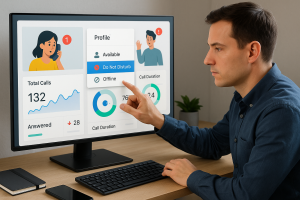
When an e-commerce sales team starts growing, communication often becomes the hidden bottleneck. Calls are missed, customer conversations become difficult to track, and sales representatives may resort to using personal numbers to keep up. Many businesses assume that adding more phone lines will solve the problem. In reality, the solution is not simply having more numbers—it is creating a smarter, more connected communication experience. This is the lesson one fast-growing online retailer learned when it adopted a multi-number mobile strategy with conXhub.
The misconception: more phone numbers mean better customer service
The retailer, which we’ll call UrbanCart, had a successful online store and a sales team of eight representatives. Each rep handled wholesale enquiries, high-value customers, abandoned-cart follow-ups, and post-purchase questions. As order volume increased, the team added mobile numbers so customers could reach sales representatives directly.
At first, this seemed like progress. Customers appreciated having a direct contact. But the system quickly became fragmented. Some representatives used personal phones, others used business mobiles, and a few relied on messaging apps. When someone was unavailable, the customer often had no clear alternative. Managers also struggled to understand which enquiries were being followed up and which were being lost.
The first misconception was clear: more access points do not automatically create better access. Without a central structure, multiple numbers can create confusion for customers and sales teams alike.
Step one: separate personal convenience from business communication
UrbanCart began by identifying every communication channel used by its sales representatives. The goal was not to remove flexibility, but to ensure business conversations remained connected to the company.
With conXhub, each representative could use a business number from a mobile device without exposing a personal number. This made it easier for reps to work remotely, respond while travelling, and maintain a professional identity across calls and messages.
For sales teams, this distinction is essential. A personal mobile number belongs to an individual. A business number belongs to the customer relationship. When representatives leave, change roles, or take holidays, customer communication should remain with the business—not disappear with the handset.
Step two: make the multi-number mobile experience intentional
Another common misconception is that a multi-number mobile setup is only useful for large enterprises. UrbanCart discovered the opposite. Even a small sales team benefited from assigning numbers according to customer needs and sales responsibilities.
The company introduced separate lines for wholesale enquiries, VIP customers, general sales support, and regional campaigns. Representatives could manage these conversations from their mobile devices while customers received a consistent business experience.
This approach helped the team answer an important question: who should handle this conversation next? Instead of sending customers from one individual number to another, the business could direct enquiries to the right team or representative from the beginning.
Step three: replace individual memory with shared visibility
Before conXhub, UrbanCart’s follow-up process depended heavily on personal notes and memory. A sales representative might remember to call a customer tomorrow, but there was no reliable way for the rest of the team to see that commitment.
Centralised communication changed the process. Sales reps could keep business conversations organised, while managers gained a clearer view of customer engagement. If a representative was unavailable, another team member could step in with the necessary context instead of asking the customer to repeat everything.
This challenged another misconception: centralisation makes customer service less personal. In practice, it made UrbanCart’s service more personal because representatives had better information and fewer communication gaps. Customers were recognised as ongoing relationships rather than isolated phone calls.
Step four: measure the outcome beyond call volume
UrbanCart initially measured success by the number of calls answered. That metric was useful, but incomplete. The team also began looking at response time, missed enquiries, follow-up consistency, and conversion from sales conversation to order.
Within several weeks, the sales manager noticed fewer missed opportunities and more consistent follow-up. Reps spent less time switching between devices and searching through separate conversations. Customers were also less likely to repeat their needs when speaking with a different team member.
The lesson for sales leaders is simple: communication technology should be measured by the opportunities it protects, not just the calls it handles. A well-designed system gives representatives more time to sell and customers more confidence to buy.
What sales teams should do next
To build a more effective communication workflow, start by listing every number and channel your team currently uses. Identify where customers experience delays, where conversations become private or invisible, and where handovers fail.
Next, decide which communications need dedicated business numbers and which teams should manage them. Introduce a mobile solution that protects personal privacy while preserving flexibility. Finally, establish simple rules for ownership, follow-up, and escalation so every representative understands how to move a customer conversation forward.
UrbanCart did not improve its sales process by giving representatives more devices or asking them to work longer hours. It improved by connecting the tools they already used to a clearer business system. Get started with conXhub and give your sales team the structure, flexibility, and professional communication experience needed to turn more e-commerce conversations into lasting customer relationships.